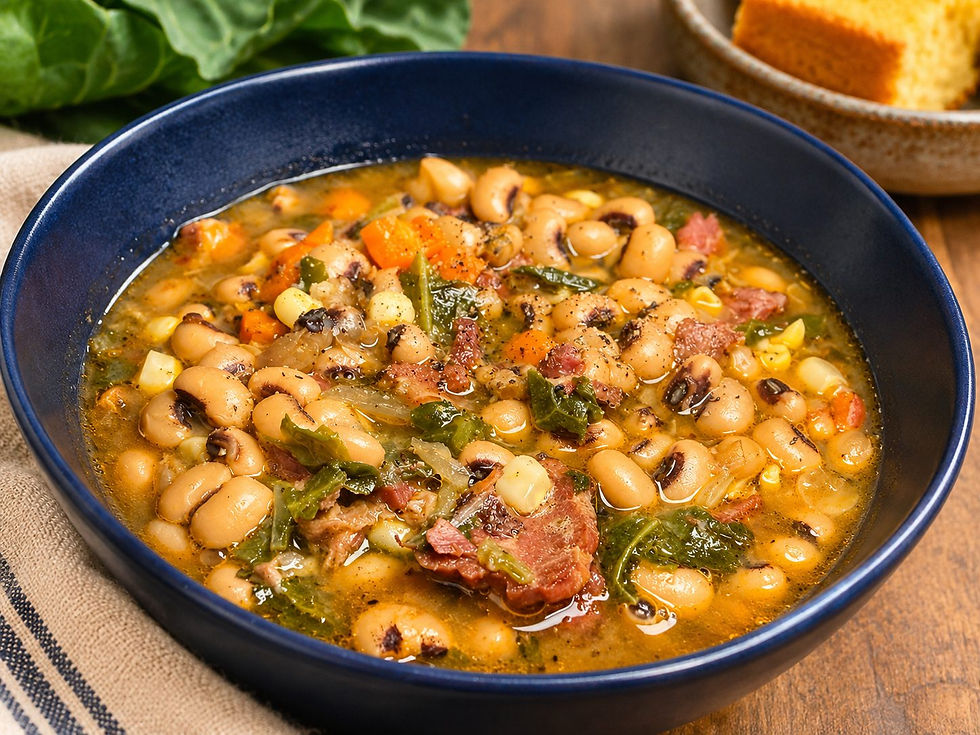
Smoky Black-Eyed Peas with Ham & Collard Greens
Real food. Real cooking. Human tested. 🍋
When life gives you lemons, make something delicious!
High-Fiber • One-Pot Meal • Leftover-Friendly • Freezer-Friendly
Servings: 6–8
Inspiration for This Meal
I like adding carrots to my black-eyed peas because they bring a little sweetness that works really well with the salty ham and earthy greens.
This is also a great way to use up leftover ham and broth. I had some sliced ham tucked away in our deep freezer since Easter, along with homemade beef broth I'd frozen. Both were perfect for this recipe. You don't need a ham hock or anything fancy to get plenty of flavor.
I prefer collard greens because they hold up beautifully while everything simmers, but kale works too. I also added a piece of dried kombu for an extra layer of savory, umami flavor.
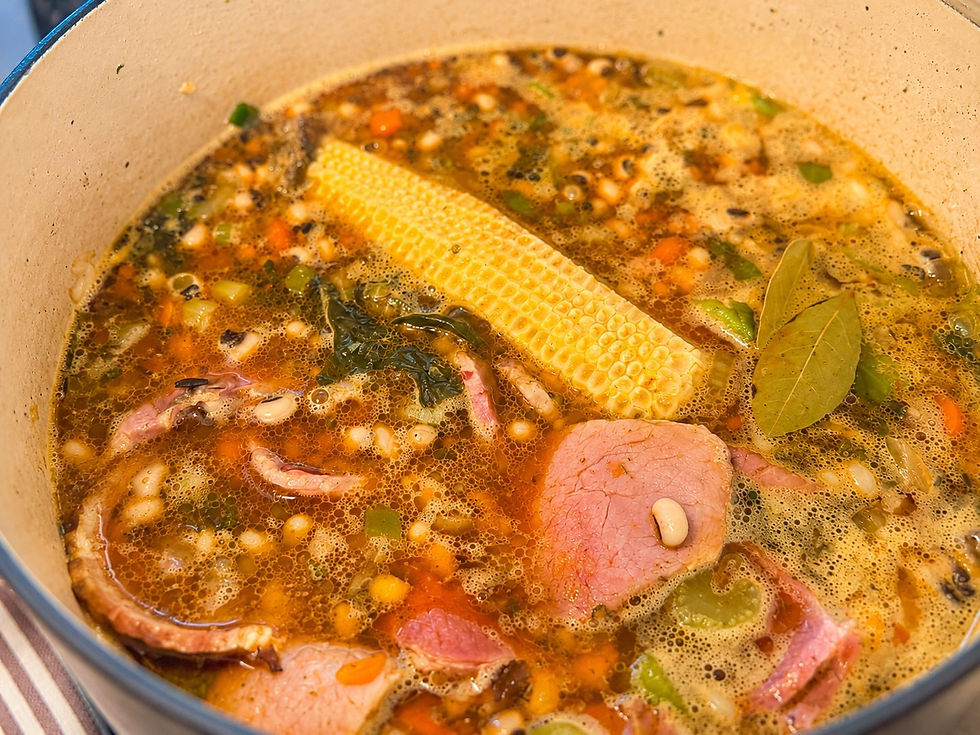
And if you're using fresh corn, save the cob! Tossing it into the pot while the peas simmer adds a little extra sweetness to the broth.
Ingredients
1 lb dried black-eyed peas, rinsed and picked over (or about 3 cans, drained and rinsed)
1–1½ cups cooked ham, cut into bite-size pieces
2 tbsp olive oil
1 cup diced onion
½ green bell pepper, diced
2 green onions, sliced, white and green parts
2 medium carrots, diced
2 celery stalks, sliced
3–4 cloves garlic, minced
Corn from 1 ear, cob reserved (or 1 cup frozen corn)
1 bunch collard greens, stems removed and leaves chopped
6 cups beef broth to start, plus additional broth or water as needed
2 bay leaves
1 tsp smoked paprika
¼ tsp dried thyme
½ tsp black pepper
¼–½ tsp red pepper flakes, optional
1 tsp Worcestershire sauce
1–2 tsp apple cider vinegar
1 piece dried kombu, approximately 2 × 4 inches, optional
Salt, to taste
Hot sauce, for serving, optional
Directions
1. Prepare the peas.
If using dried black-eyed peas, soak them overnight in plenty of water, then drain. You can skip soaking, but the peas will generally take longer to cook.
2. Sauté the vegetables.

Heat the olive oil in a large Dutch oven or heavy-bottomed pot over medium heat.
Add the onion, green onions, celery, bell pepper, and carrots. Cook for 5–7 minutes, stirring occasionally, until the vegetables begin to soften.
3. Build the flavor.
Add the garlic, smoked paprika, thyme, black pepper, and red pepper flakes, if using. Stir for about 30 seconds, until fragrant.
Add the ham and cook for another 2–3 minutes, allowing it to brown slightly around the edges.
4. Simmer the peas.
Add the drained black-eyed peas, 6 cups of beef broth, bay leaves, kombu, Worcestershire sauce, and reserved corn cob.
Bring to a gentle boil, then reduce the heat, cover, and simmer.
Soaked dried peas: approximately 45–60 minutes
Unsoaked dried peas: approximately 60–90 minutes, sometimes longer
Check occasionally and add more broth or water as needed to keep the peas submerged.
Mine needed closer to 10 cups of broth total because they took longer to cook and quite a bit of liquid evaporated.
Bean cooking times vary, especially with older dried peas. Cook until they're tender rather than relying entirely on the clock.
5. Add the greens.
During the last 20–30 minutes of cooking, stir in the chopped collard greens and continue simmering until tender.
6. Add the corn.
Once the black-eyed peas are tender, stir in the corn kernels and simmer for another 10 minutes.
7. Finish the broth.
Remove the bay leaves, kombu, and corn cob.
Stir in 1 teaspoon of apple cider vinegar. Taste and add another teaspoon if you'd like a little more brightness.
Taste before adding salt, since the ham and broth may already provide plenty.
Serve warm with hot sauce, if you like.
Using Canned Black-Eyed Peas
Short on time? Canned black-eyed peas work too.
Use approximately 3-4 cans, drained and rinsed.
After sautéing the vegetables, spices, and ham, add the collard greens, kombu, bay leaves, Worcestershire sauce, corn cob, and 2½–3 cups broth.
Simmer for 20–30 minutes, or until the collards are nearly tender.
Add the canned black-eyed peas and corn kernels. Simmer another 10 minutes, until everything is heated through and the greens are tender.
Remove the bay leaves, kombu, and corn cob. Finish with the apple cider vinegar and season to taste.
Make It Your Own
One of my favorite things about a pot of beans is how easily you can work with what you already have.
Collard greens: Kale works just as well and cooks a little faster.
Ham: Leftover holiday ham is perfect. No ham hock needed.
Broth: Chicken broth works beautifully, and vegetable broth is an option for a lighter flavor. I used homemade beef broth that even had a few little pieces of beef in it.
Onions: Yellow, white, or red onions all work.
Corn: Frozen corn is an easy substitute. You won't have the cob to simmer, but you'll still get that little bit of sweetness.
Kombu: Leave it out if you don't have any. There's plenty of flavor from the ham, vegetables, and seasonings.
Heat: Skip the red pepper flakes for a mild version, then let everyone add hot sauce at the table.
Black-eyed peas: Canned peas are a great shortcut when you don't have time to cook dried beans.
What I Thought
The broth was my favorite part of this one. Between the ham, homemade beef broth, vegetables, kombu, and corn cob, it had so much flavor. And somehow, it was even better the next day.
The black-eyed peas, on the other hand, gave me a little trouble!
I'd soaked them for almost 24 hours in the refrigerator, changing the water several times, but after more than an hour of simmering, they were still pretty firm. I'm guessing I ended up with an older batch of dried peas, even though I'd just bought them.
Rather than keep simmering forever, I transferred everything to my Instant Pot, added a little more broth, and pressure cooked for another 5 minutes with a natural release (times may very). That did the trick! I added the corn and vinegar afterward.
And if your beans refuse to soften too, now you know the Instant Pot rescue worked for me!
Storage & Leftovers
Store leftovers in an airtight container in the refrigerator for 3–4 days.
For longer storage, freeze in airtight, freezer-safe containers for up to 3 months. Cool promptly before refrigerating or freezing, and leave a little room for the liquid to expand.
Reheat gently on the stovetop, adding a splash of broth or water if the peas have absorbed too much liquid.
This is one of those meals that tastes even better after a day in the refrigerator, making it perfect for meal prep or an easy lunch the next day.